- Crude oil inventories: +3.08 million barrels (expected: +0.5 million). This is a significant increase, exceeding the market consensus by more than sixfold (Bloomberg).
- Distillate inventories: -3.14 million barrels (expected: -1.25 million). A very deep decline, suggesting strong demand for diesel and heating oil or production issues.
- Gasoline inventories: -1.59 million barrels (expected: -1.55 million). The result is almost perfectly in line with expectations, indicating stable seasonal demand.
- Refinery utilization: -0.1 percentage points (expected: +0.8 percentage points). A surprising drop in refinery activity, which partially explains the rise in crude oil inventories (unprocessed crude).
- Imports from Mexico: -59% (drop to 165k b/d). This is a historically low level, resulting from Mexico’s policy of limiting exports in favor of its own refineries (including Dos Bocas).
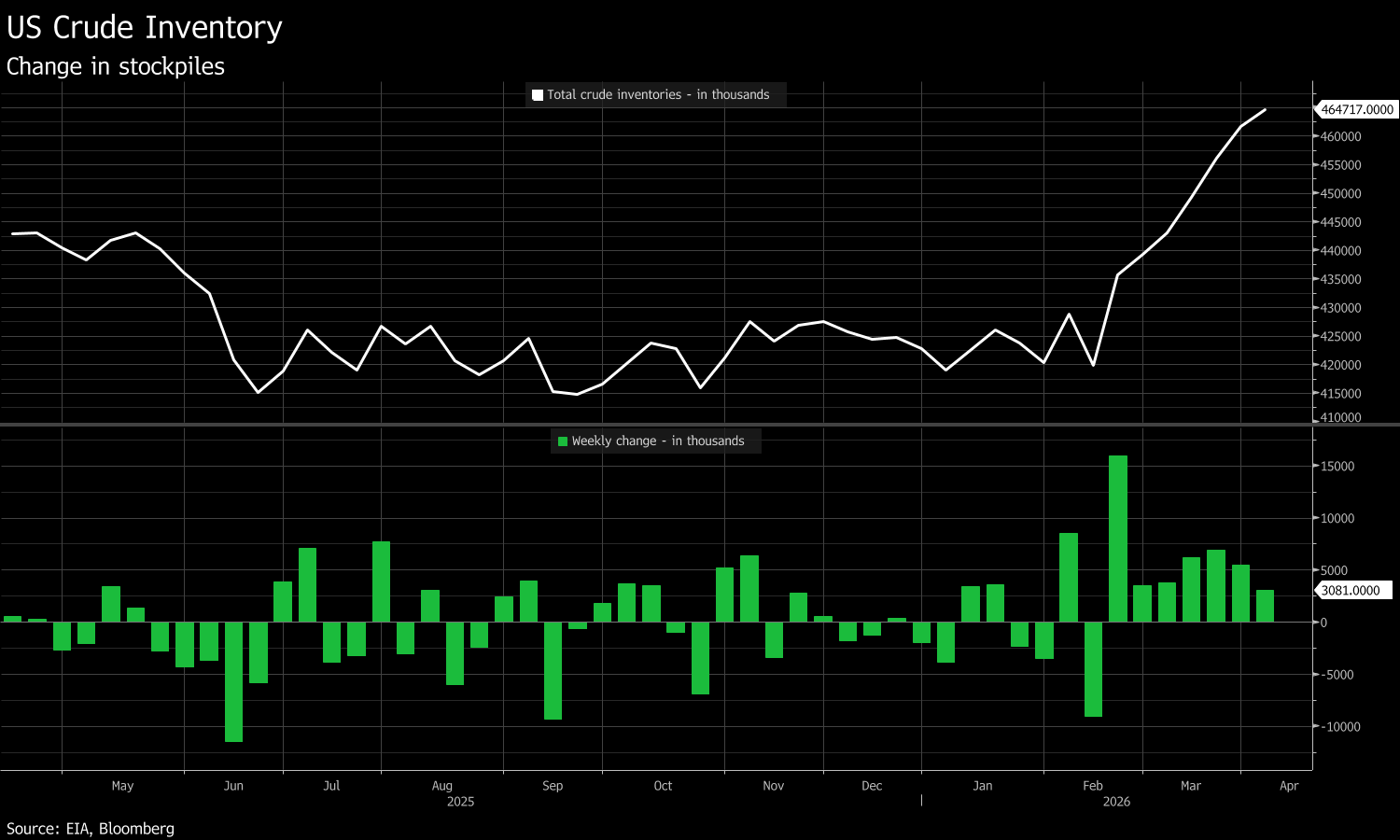
This marks the 7th consecutive increase in U.S. crude oil inventories. Source: Bloomberg Finance LP, XTB
Crude is piling up, but fuels are depleting
The EIA report paints a picture of a “two-speed” market, which, in the context of the recently announced ceasefire between the US and Iran, may further complicate valuations:
- Supply shock in raw material: The increase in oil inventories by over 3 million barrels at a time when the market expected a symbolic rise is a bearish signal. This results mainly from lower refinery throughput (utilization) and solid imports from Canada, which cushioned shortages from other directions. We have observed a continued strong increase in inventories over recent weeks.
- Distillate crisis: While crude oil is increasing, stocks of finished fuels (especially distillates) are melting away rapidly. This is a bullish signal for refining margins. The product market remains extremely tight, which may prevent fuel prices at gas stations from falling, even if the price of Brent crude itself plummets in response to the truce.
- Mexican “detox”: The drastic drop in imports from Mexico (by 233k b/d) is a structural change. The US must look for heavy crude elsewhere (e.g., the increase in imports from Venezuela to 321k b/d), which increases logistical costs for refineries in the Gulf Coast (PADD 3).
- Geopolitical context: These data hit the market just as the “war premium” is evaporating following the April 7 truce. The oversupply of crude in the US (+3 million bbl) gives the Trump administration an additional argument in negotiations—America is showing that it has reserves, which weakens Iran’s negotiating position regarding the Strait of Hormuz.
- Release of reserves: Since March 20, only 2 million barrels of oil have been released from the Strategic Petroleum Reserve (SPR), despite an announced release of as much as 172 million barrels.
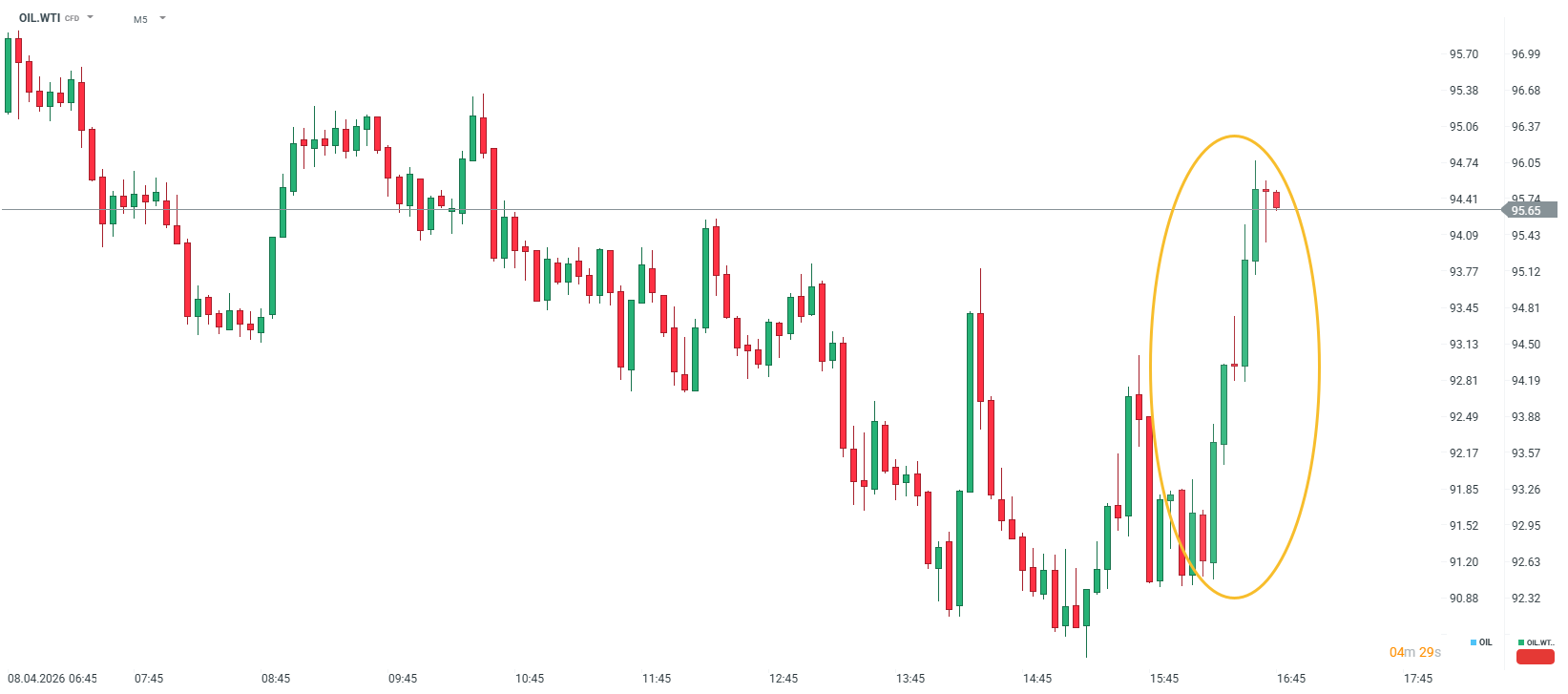
It is worth emphasizing that oil is reacting today to issues concerning Iran. The latest news indicates that Iran demands Israel stop attacking Lebanon. Without a cessation of attacks, Iran would reportedly decide to abandon the ceasefire quite quickly.
The material on this page does not constitute financial advice and does not take into account your level of understanding, investment objectives, financial situation or any other specific needs. All information provided, including opinions, market research, mathematical results and technical analyzes published on the Website or transmitted To you by other means, it is provided for information purposes only and should in no way be construed as an offer or solicitation for a transaction in any financial instrument, nor should the information provided be construed as advice of a legal or financial nature on which any investment decisions you make should be based exclusively To your level of understanding, investment objectives, financial situation, or other specific needs, any decision to act on the information published on the Website or sent to you by other means is entirely at your own risk if you In doubt or unsure about your understanding of a particular product, instrument, service or transaction, you should seek professional or legal advice before trading. Investing in CFDs carries a high level of risk, as they are leveraged products and have small movements Often the market can result in much larger movements in the value of your investment, and this can work against you or in your favor. Please ensure you fully understand the risks involved, taking into account investments objectives and level of experience, before trading and, if necessary, seek independent advice.