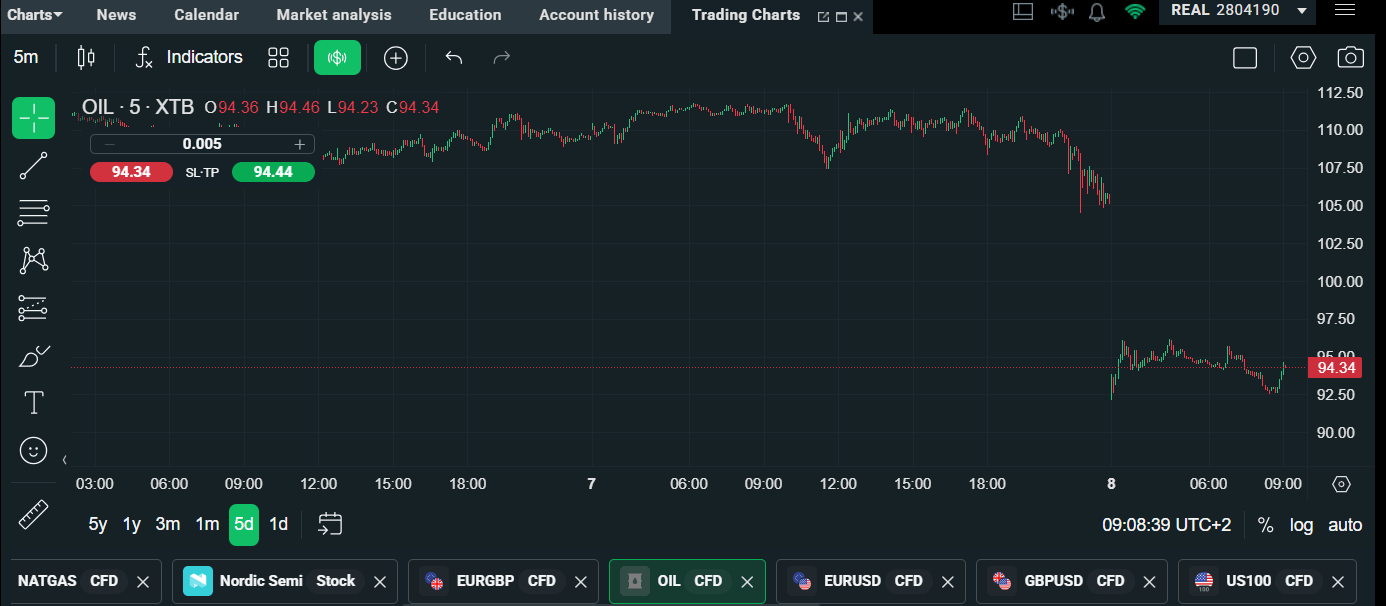
There has been an impressive reaction to the news that the US and Iran will engage in a 2-week ceasefire. Stocks are jumping, bond yields are sharply lower, and the oil price is plunging. Currently Brent crude is down nearly 13%.
Details of the 11th hour agreement between Iran and the US include:
- US and Israel to end strikes on Iran in exchange for the reopening of the Strait of Hormuz. This is critical to boost oil and gas supplies around the world, which is why the price of oil and gas has plunged, with Brent having a 2-standard deviation move from the mean in the last few hours.
- This buys time for a long-lasting peace deal to be negotiated.
- World leaders are reportedly meeting in the Gulf today to discuss diplomatic efforts to ensure that the ceasefire holds, this suggests that there is international hope that this deal could be the beginning of the end of this war.
- There is a risk that the deal could come undone in the coming days, Iran’s 10-point plan for peace includes a demand for Washington to accept its uranium enrichment programme. This seems like it will be a major sticking point, especially since Donald Trump has repeatedly claimed that the whole aim of the war was to eradicate Iran’s nuclear capabilities.
The market is warmly welcoming the news of a deal, and the massive plunge in the price of oil is a sign that investors are willing to trade on hope that the Strait of Hormuz will reopen. However, it is worth noting that the oil price is still elevated and is above $90 per barrel, well above the $81 per barrel average for Brent crude over the last 12 months.
The future direction of the oil price will be dependent on the progression of the talks between Iran and the US. For the Strait of Hormuz to operate effectively, insurers and shipping operators need to be comfortable that that risk of ships passing through the Strait has decreased. Over 800 tankers are currently stuck in the Strait, we need to see movement of these in the coming days for the drop in the oil price to be sustained.
While there are reasons to be cautious, the market moves have been stunning so far this morning:
- European stocks are surging. The Eurostoxx index is up 5%, the FTSE 100 is higher by 3%, but it is being held back by the oil majors, as they struggle to gain momentum due to the sharp drop in the oil price.
- US stock market futures are currently pointing to a 2.6% gain for the S&P 500 and a 3% rally in the Nasdaq. This suggests that the pattern of US stock market underperformance vs. its international peers could continue, even in this period of recovery.
- Asian stocks surged, the Nikkei is higher by more than 5%, the Dubai Stock exchange is higher by more than 6% and has had its best day since 2020.
- The dollar is plunging on a broad basis, and it is the weakest currency in the G10 FX space this morning. GBP/USD is higher by more than 1%, USD/JPY is down 0.8% and EUR/USD is also higher by 0.85%.
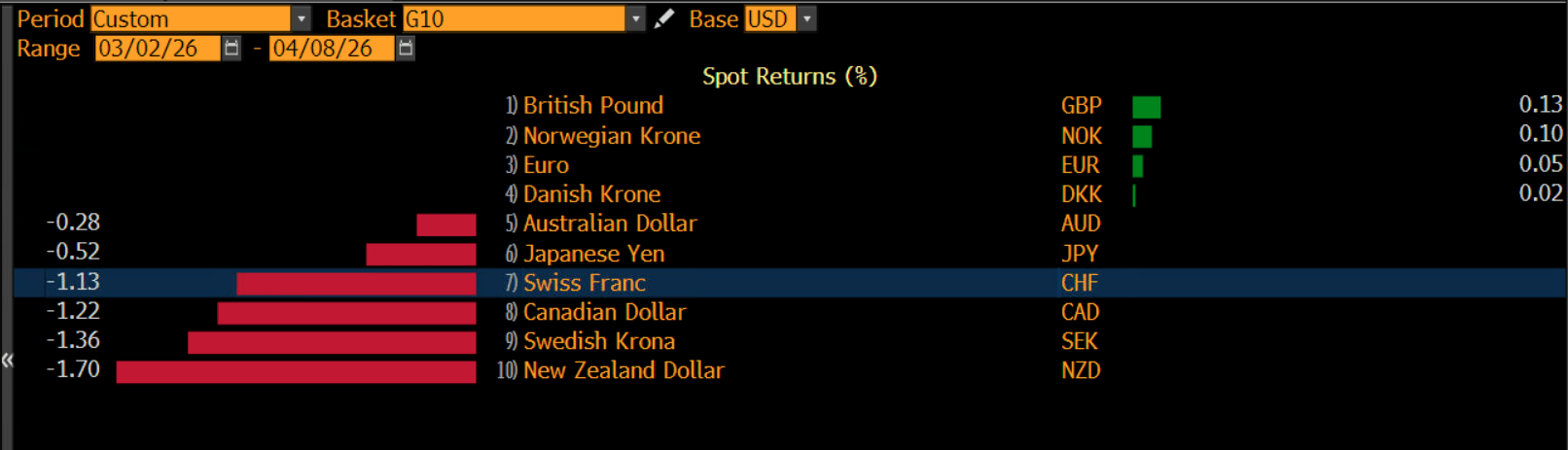
- The pound is now eking out a gain vs, the USD since the onset of the war, but there is still room for the Aussie, the kiwi, the yen and the Swiss franc to make up gains vs. the USD if this ceasefire holds.
- The bond market is reversal mode and yields are plunging around the world. The French 10-year yield is down 22bps, Italian yields are lower by 27bps. UK Gilt yields are down by 20 bps across the curve, as the sharp drop in the oil price leads to a massive repricing of interest rate expectations.
- There is now just over 1 hike expected from the BOE, down from nearly 4 at the peak of the conflict. If this ceasefire leads to a lasting peace, then the inflationary impact could be lower, and we could start to see rate cuts being pried back in for the BOE in the coming months.
Overall, market enthusiasm for the ceasefire is strong this morning, but this is still a news driven market. If the ceasefire is broken or if ships are not flowing through the Strait of Hormuz quickly, then market sentiment could shift. For now, it’s a celebratory mood out there.
Chart 1: Brent crude oil price plunges after ceasefire announcement
Source: XTB
Chart 2: GBP is the most resilient currency vs, the USD in the G10 since the onset of the war.
Source: XTB and Bloomberg
The material on this page does not constitute financial advice and does not take into account your level of understanding, investment objectives, financial situation or any other specific needs. All information provided, including opinions, market research, mathematical results and technical analyzes published on the Website or transmitted To you by other means, it is provided for information purposes only and should in no way be construed as an offer or solicitation for a transaction in any financial instrument, nor should the information provided be construed as advice of a legal or financial nature on which any investment decisions you make should be based exclusively To your level of understanding, investment objectives, financial situation, or other specific needs, any decision to act on the information published on the Website or sent to you by other means is entirely at your own risk if you In doubt or unsure about your understanding of a particular product, instrument, service or transaction, you should seek professional or legal advice before trading. Investing in CFDs carries a high level of risk, as they are leveraged products and have small movements Often the market can result in much larger movements in the value of your investment, and this can work against you or in your favor. Please ensure you fully understand the risks involved, taking into account investments objectives and level of experience, before trading and, if necessary, seek independent advice.